The quest for a unity of art, architecture and craft is as old as the categories of art, architecture and craft themselves. The act categorization signals the presence of a division, of a branching off, that the quest for unity seeks to reverse: without division, no need for division to be remedied. The quest for such unification is thus in fact a quest for reunification, a recovery of an essential unity that is in fact already there, lying not only in the sum of the combined constituent parts but also within those parts; that not only spans a set of works, but that also lies within each and every one of them; an internal unity which in fact is what allows any external unity to exist. A chain, after all, is only as strong as its weakest link.
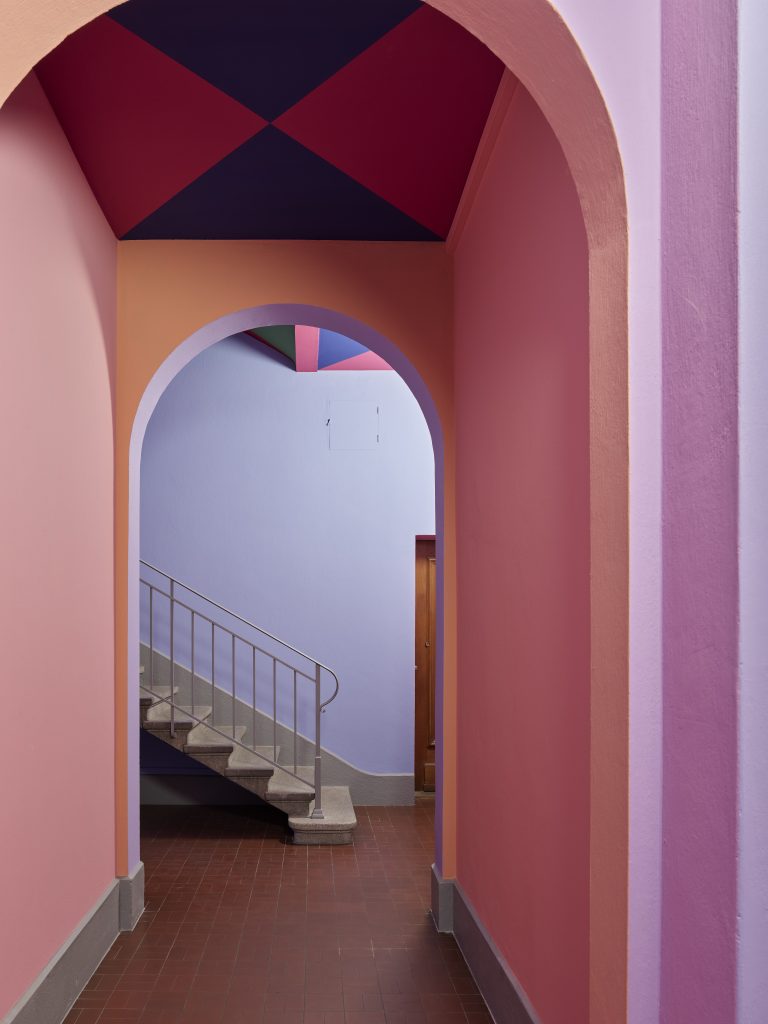
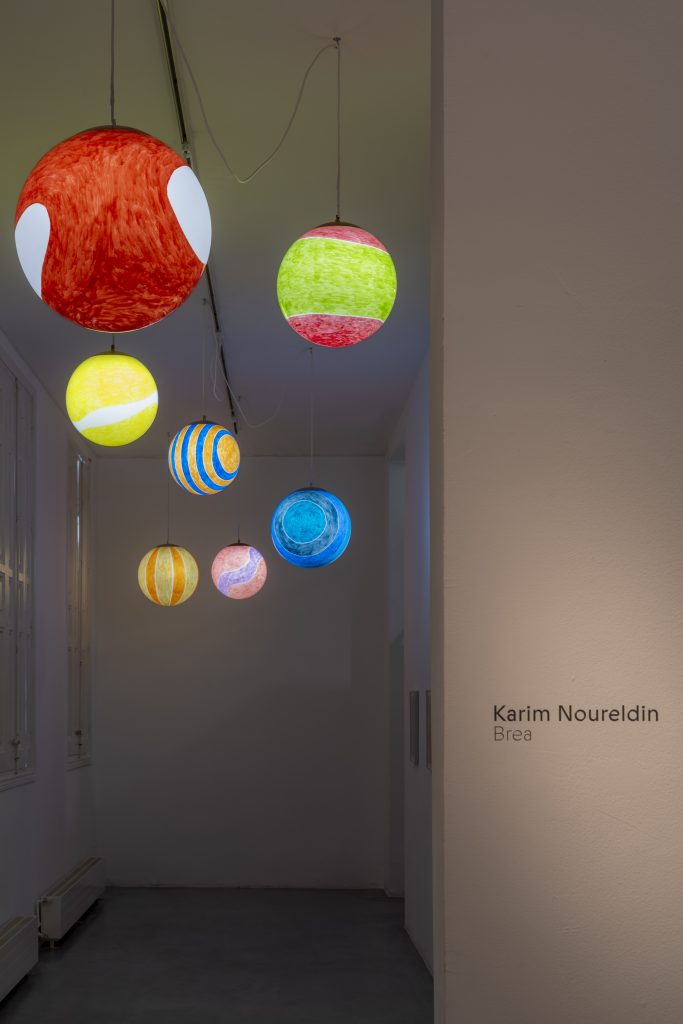
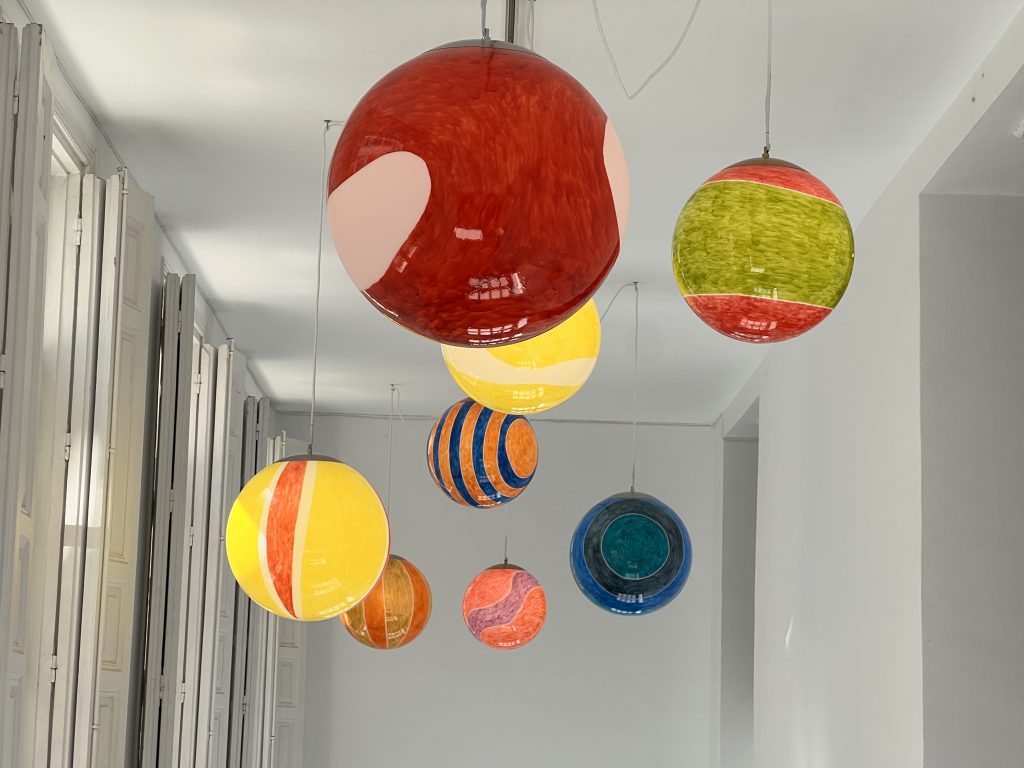
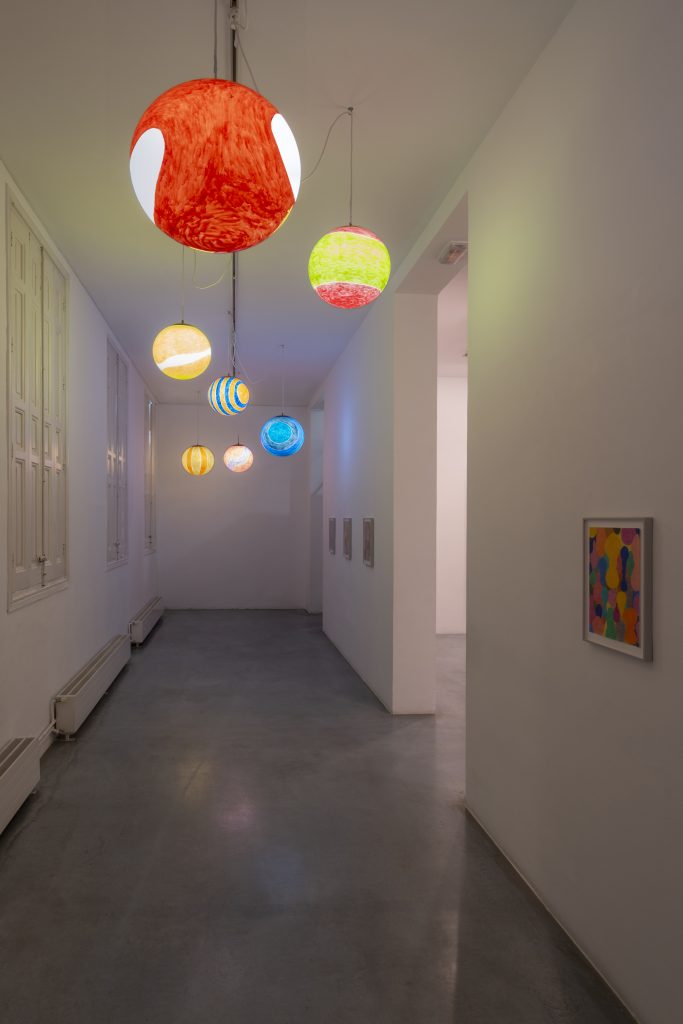
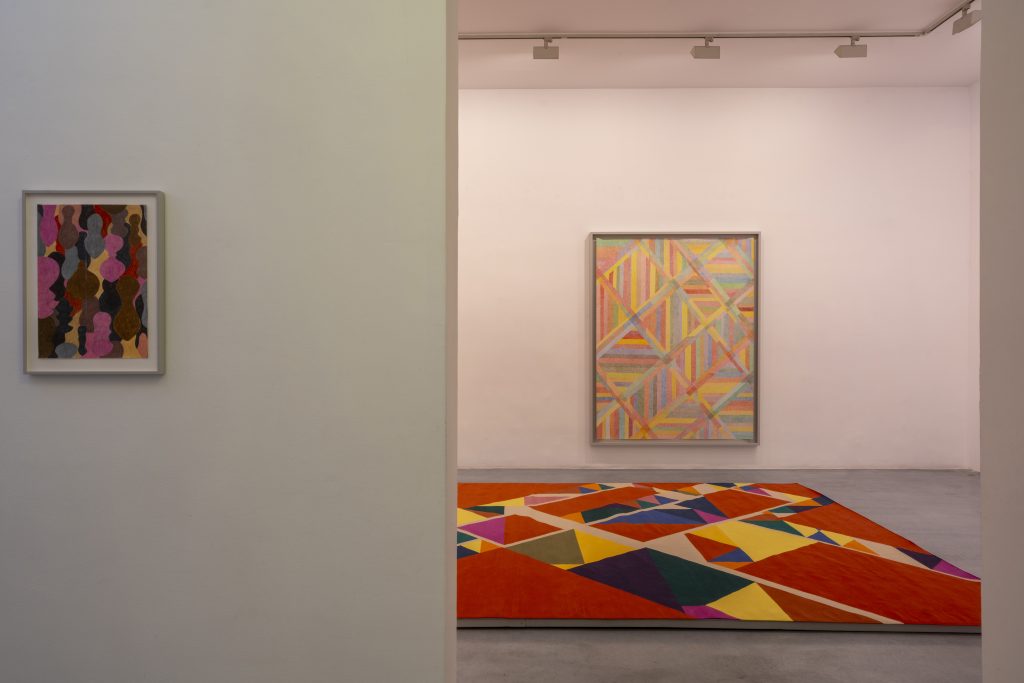
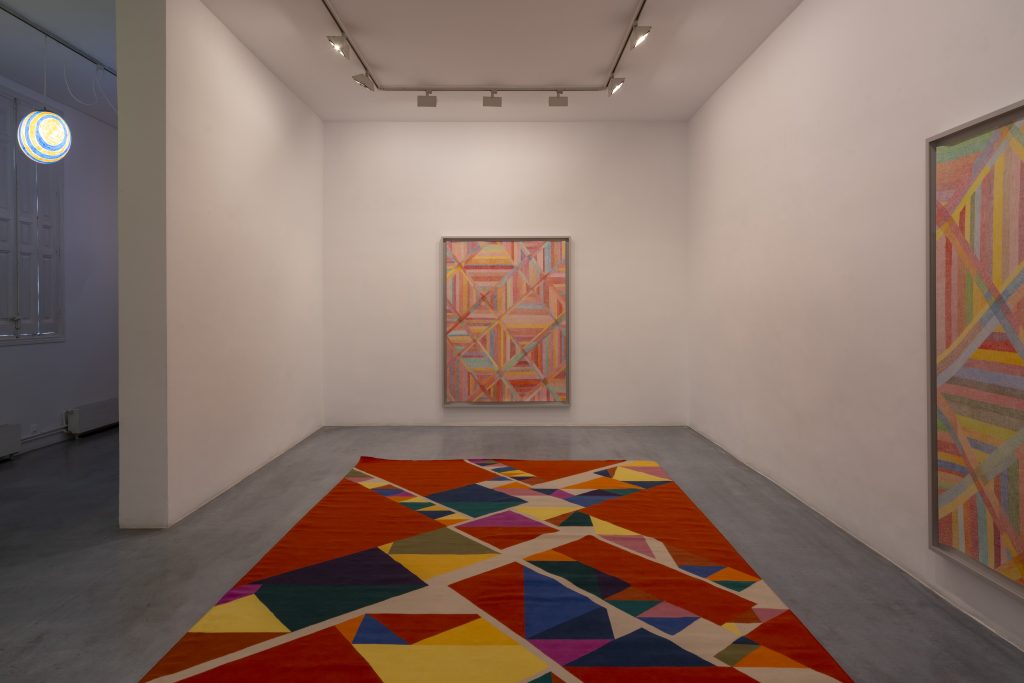
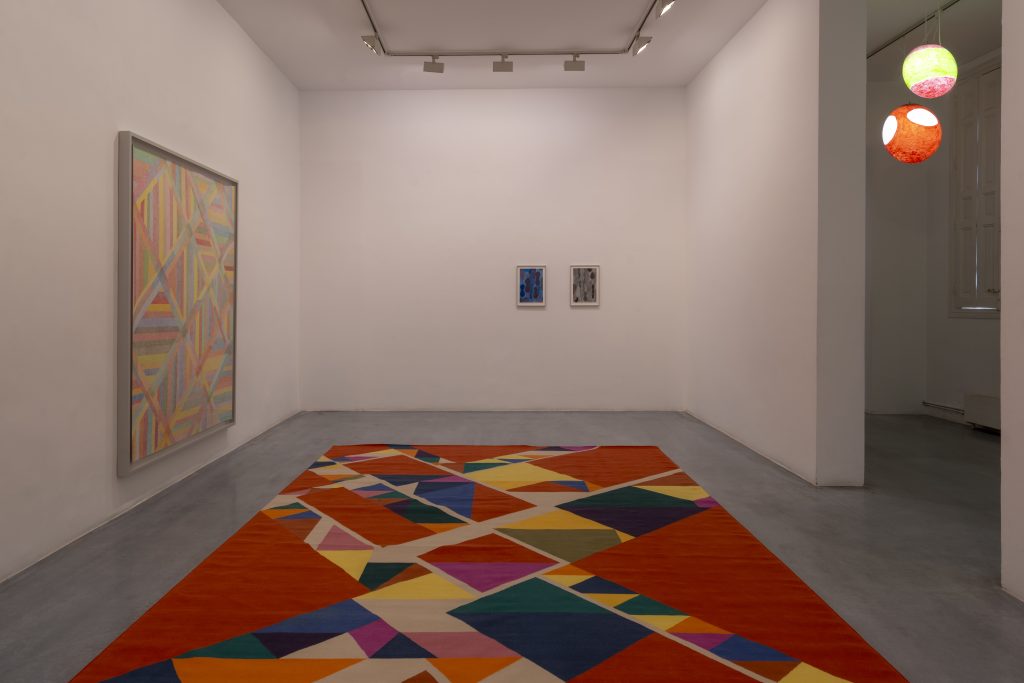
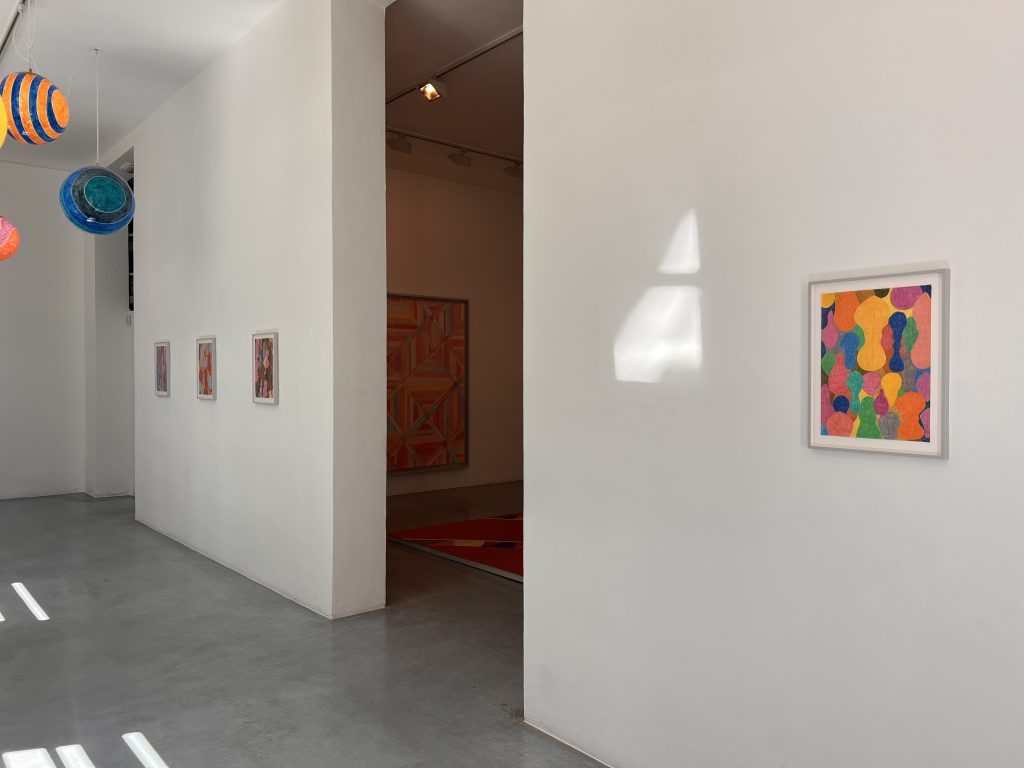
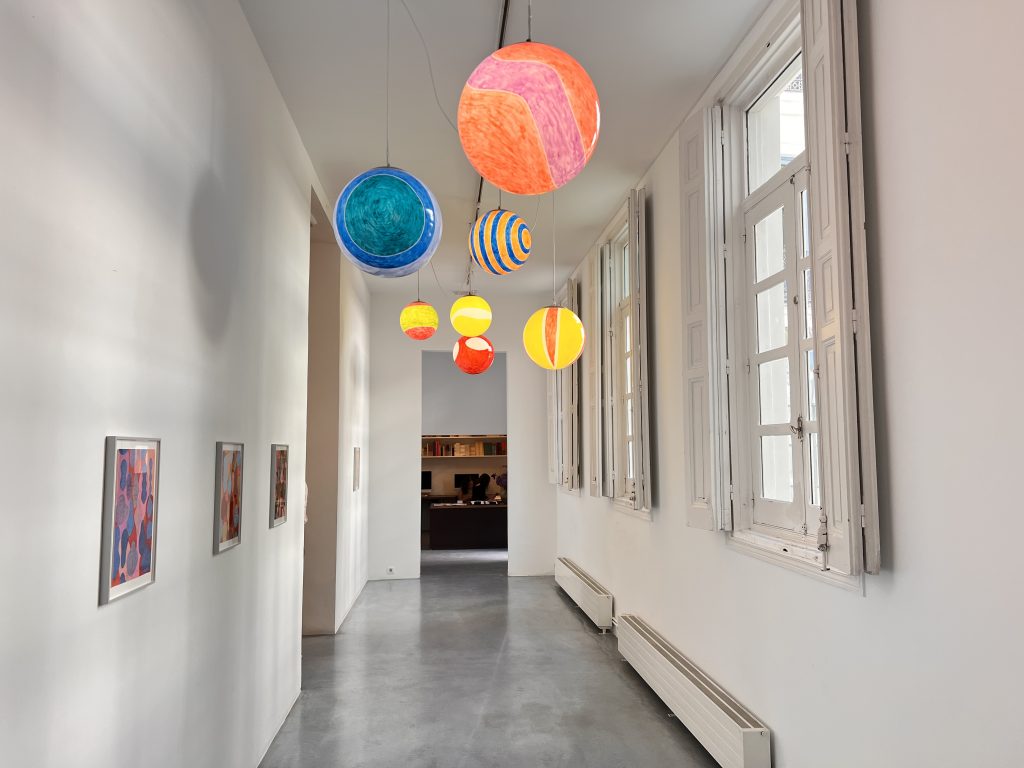
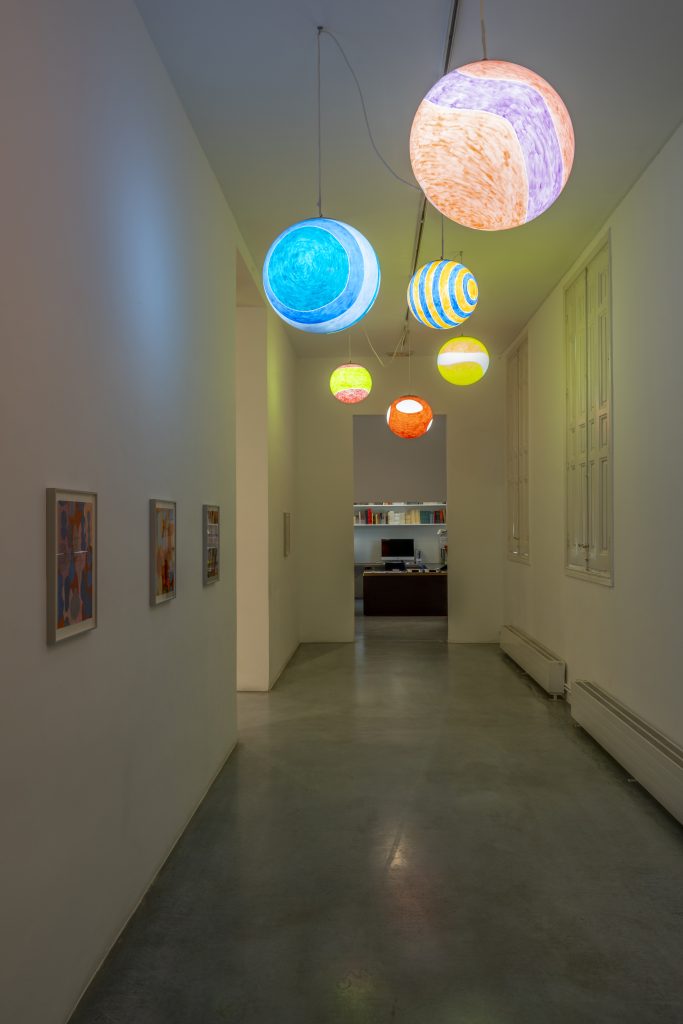
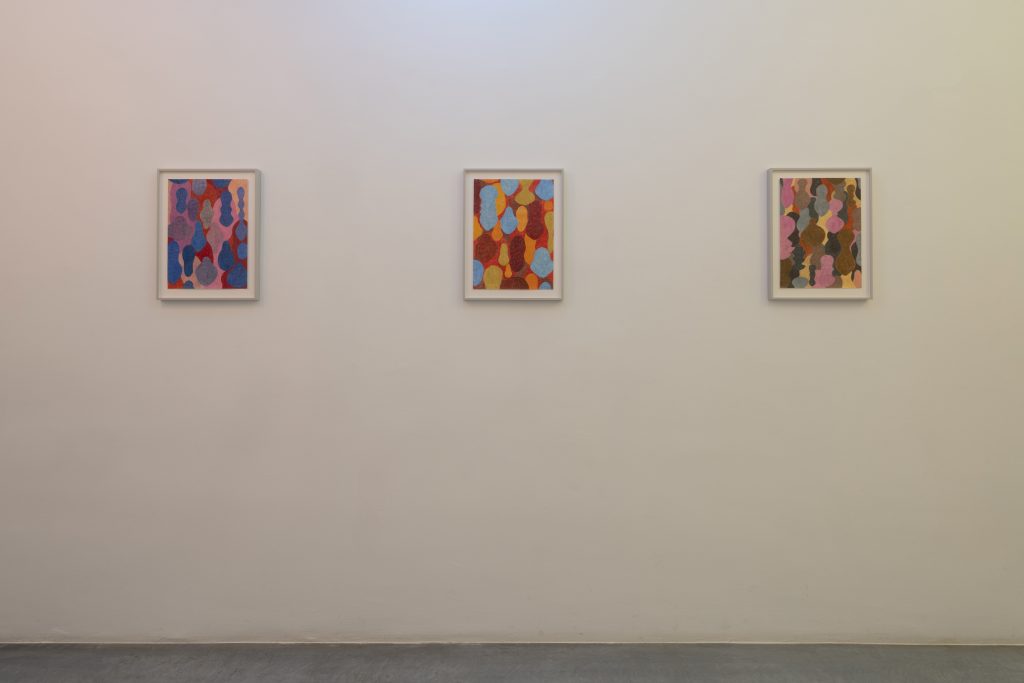
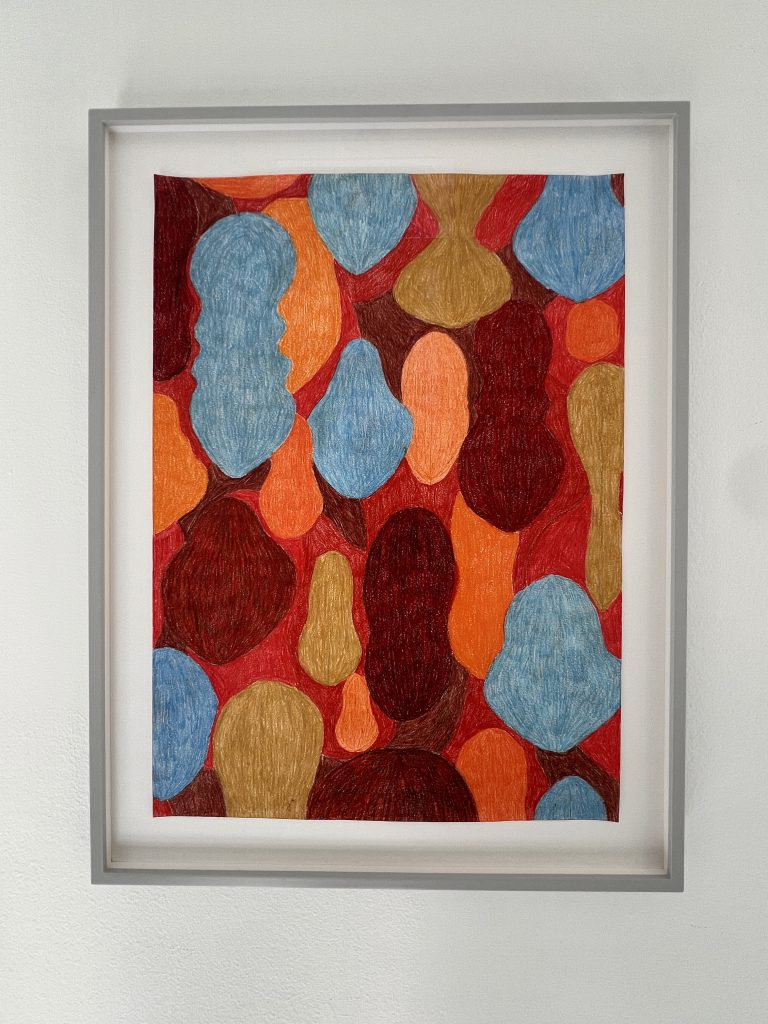
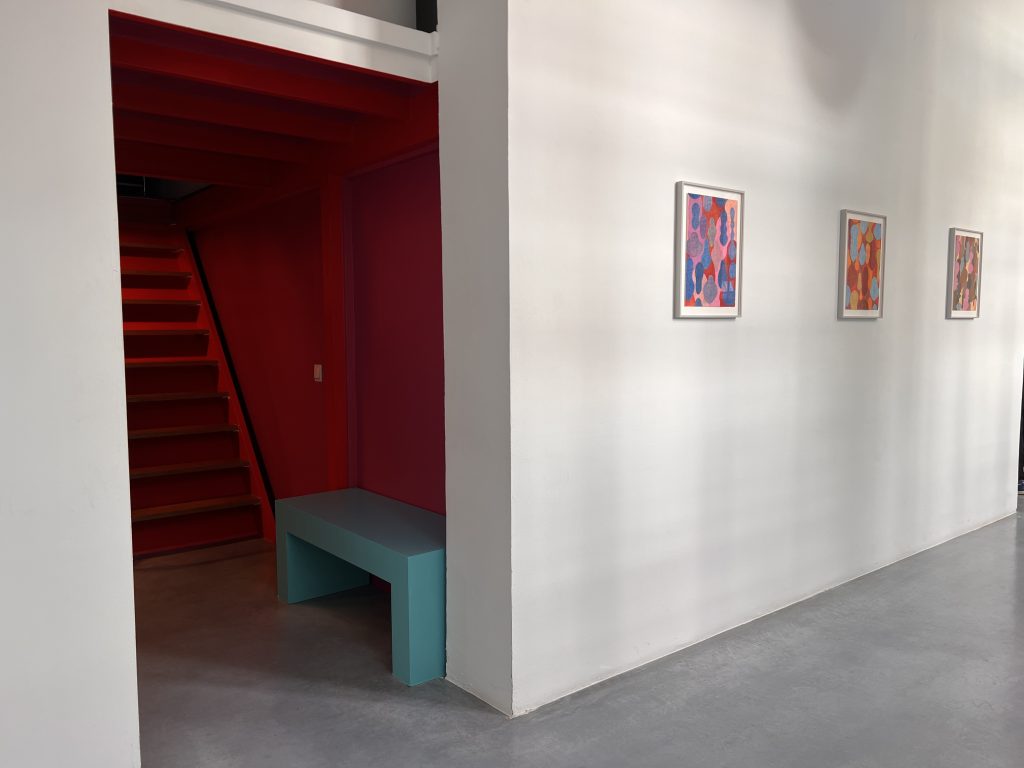
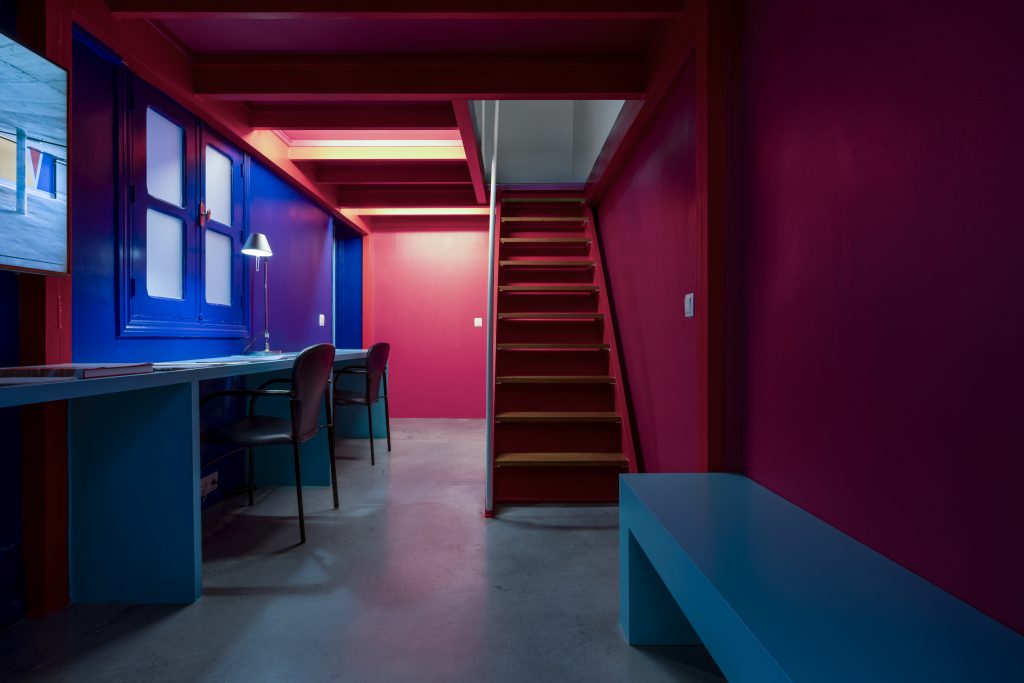
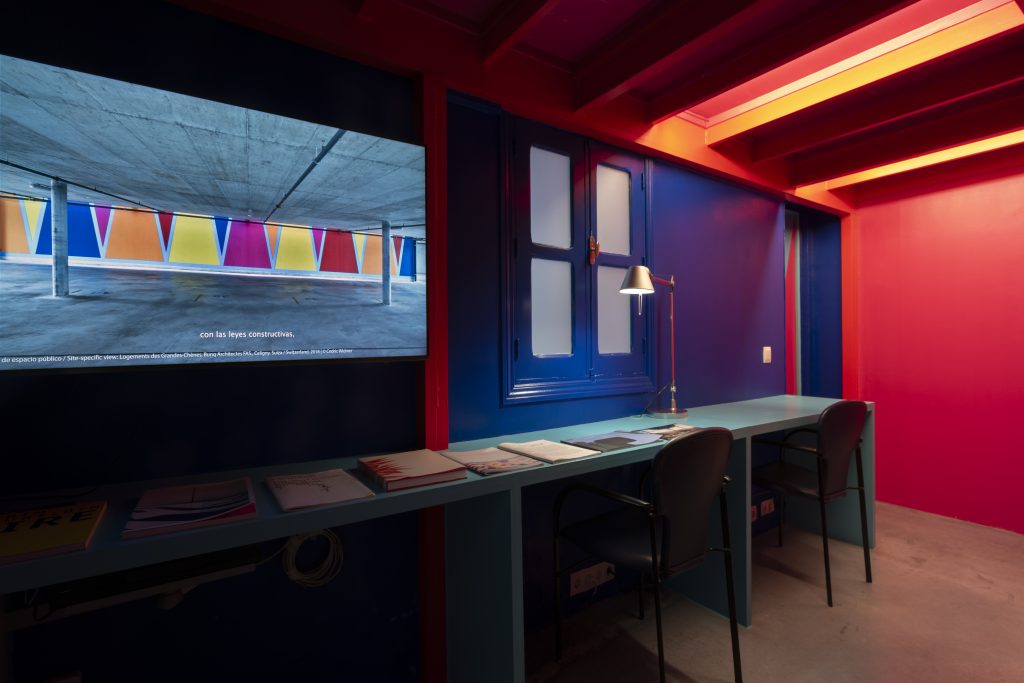
The interplay of inner and outer unity within and across works of art is central to Karim Noureldin’s current exhibition at the Galería Elba Benítez. Titled Brea, the exhibition consists of work in various formats, including drawings on paper, hand-painted hanging lamps, floor textiles, and a site-specific wall drawing. Throughout the exhibition, both the individual works and the wide range they encompass display the Swiss-Egyptian artist’s signature use of employing carefully calibrated color in geometric forms and patterns in such a way as to create large- and small-scale perceptual experiences. Multi-directional dynamics of proportion, scale and texture intersect with one another within and across the various formats, giving rise to skewed symmetries and complexly unfolded topologies (that Noureldin is frequently commissioned by architects and designers to collaborate on the creation and demarcation of spaces comes as no surprise, given the latent spatiality of his image-based work.) Even the fact that the title Brea — a title chosen by the artist phonetically, i.e. based on the sound’s universal sonority, independent of its possible meaning in any given language — applies to many of the individual works on view well as to the exhibition as a whole points to the interplay between part whole that is present in both.
At the same time, in Brea what is always paramount is surface — painted surface, drawn surface, woven surface, illuminated surface. Format becomes multivalent: textile evokes paper and paper evokes textile; wall evokes glass and glass evokes wall. As a result, surface here is not superficial; to the contrary, in Brea surfaces come together, within and across the works on view, to shape a kind of paradoxical spatiality of indeterminate dimensionality. This, ultimately, is what the interplay of inner and outer unity yields in Brea: to create a kind of metaphorical environment into which the viewer, via perception itself, can enter.
George Stolz
The Galería Elba Benítez would like to thank von Bartha for its support and collaboration with the exhibition Brea.
Karim Noureldin, Brea | 21.05-11.07.2026 | Galería Elba Benítez